
MARKETING NEXUS – Concepts Made Relatable
Marketing doesn’t have to feel like a lecture. At Marketing Nexus, we bring marketing concepts to life by connecting them to situations you actually experience. Think of it as learning marketing in a way that feels natural — because it mirrors real life.
Welcome to the Marketing Nexus of Campus Canvas — your go-to hub for making sense of marketing in a way that sticks. Instead of drowning in jargon and textbooks, we simplify the ideas and make them relatable.
Core Marketing Concepts
1. Needs, Wants, Demands
Definition:
Needs are basic human necessities essential for survival or psychological well-being (food, rest, connection). Wants are shaped by personal preferences, culture, trends, and social media influence. Demands arise when consumers have the willingness and financial ability to buy the specific product they want. Marketers aim to turn wants into demands through branding, advertising, and value creation.
Example:
As a student, you need sleep to survive, you want a full 8 hours because you’ve seen self-care reels, and you demand 8 hours… but financial reality (assignments) and social reality (group chats at 1 AM) deliver 8 minutes before class. Marketing twist: Coffee brands know this and target you with “Stay awake, stay productive” ads.

2. Value & Satisfaction
Definition:
Value is the customer’s judgment of the overall worth of a product based on what they receive (benefits) vs. what they give up (money, time, effort). Satisfaction occurs when the product meets or exceeds expectations, leading to repeat use and loyalty.
Example:
You drag yourself to college expecting a boring lecture, but the professor suddenly cancels class. You feel maximum value (you saved time + energy + mental peace). Your satisfaction? Off the charts—like the feeling when the assignment deadline gets extended without even asking.

3. Segmentation, Targeting, Positioning (STP)
Definition:
Segmentation divides the market into smaller groups with similar traits. Targeting selects the segment worth serving based on profitability and relevance. Positioning is how a brand wants to be perceived relative to others in the consumer’s mind.
Example:
The canteen samosa vendor segments students into:
Broke, Very broke ,Extremely broke, “Bro, I’ll pay tomorrow” category . He targets the ones who skip breakfast and live on snacks. He positions the humble ₹10 samosa as “the official survival food during deadlines.”

4. Marketing Mix (4Ps)
Definition:
The 4Ps—Product, Price, Place, Promotion—are tools marketers use to design offerings, communicate value, and deliver satisfaction. They guide decisions about what to sell, at what price, where it should be available, and how to promote it.
Example:
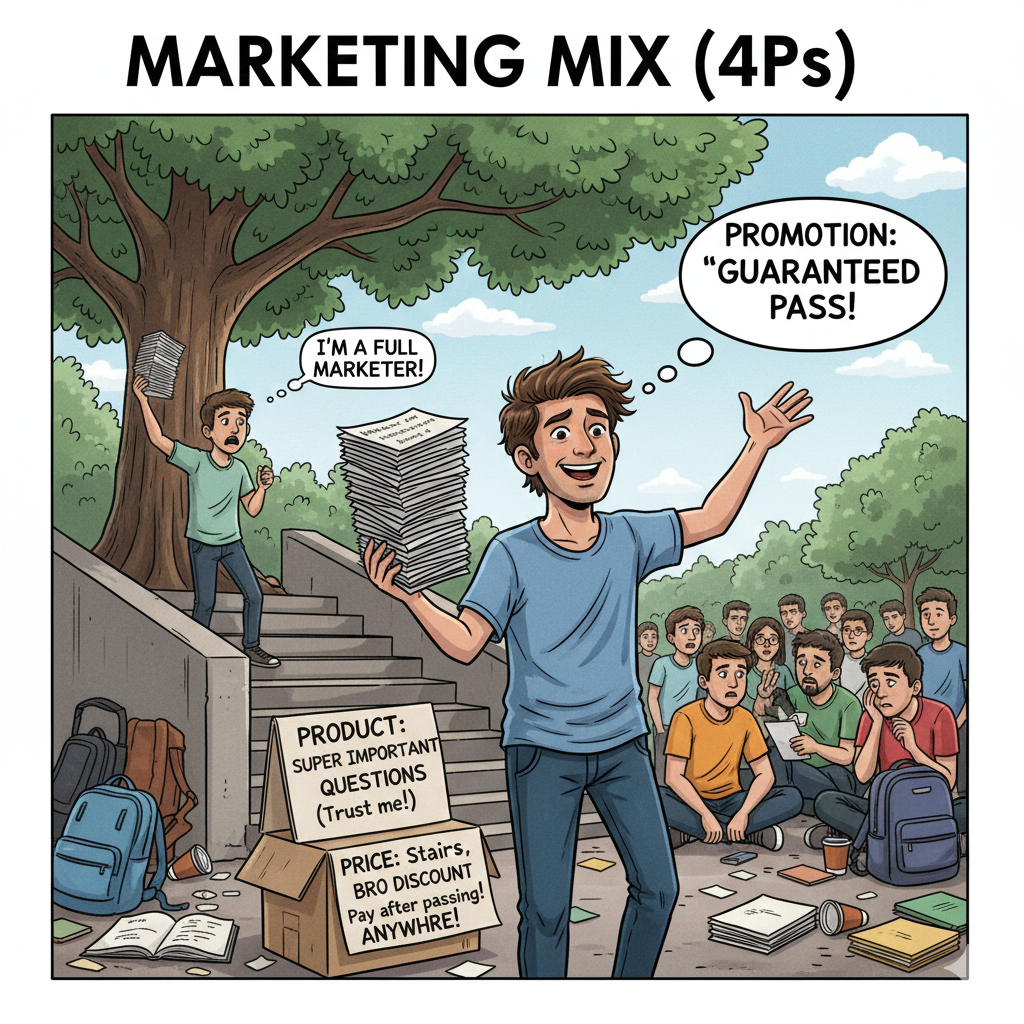
Your friend selling photocopied exam notes is basically running a mini-business: Product: Notes with questionable handwriting Price: “Bro discount” or “pay me after passing” Place: Stairs, canteen, under the tree — basically anywhere on campus Promotion: “Trust me, these are SUPER important questions.”
Congratulations, your friend is a full marketer without knowing it.
5. Exchange & Relationships
Definition:
Exchange occurs when two parties trade something of value—money, time, information—to receive something beneficial. Relationship marketing focuses on building long-term trust, loyalty, and emotional bonds to ensure repeat exchanges.
Example:
You once lent your friend a pen. Now you’re in an unspoken long-term pen-sharing contract. They never return pens, but guess what? You still give because the relationship matters. And you’ll both forget instantly who owes whom.

DIGITAL MARKETING CONCEPTS
1. SEO (Search Engine Optimization)
Definition:
SEO enhances a website’s visibility by improving content, structure, speed, and keyword relevance so it ranks higher organically on search engines.
Better ranking = more visitors = more potential conversions.
Example:
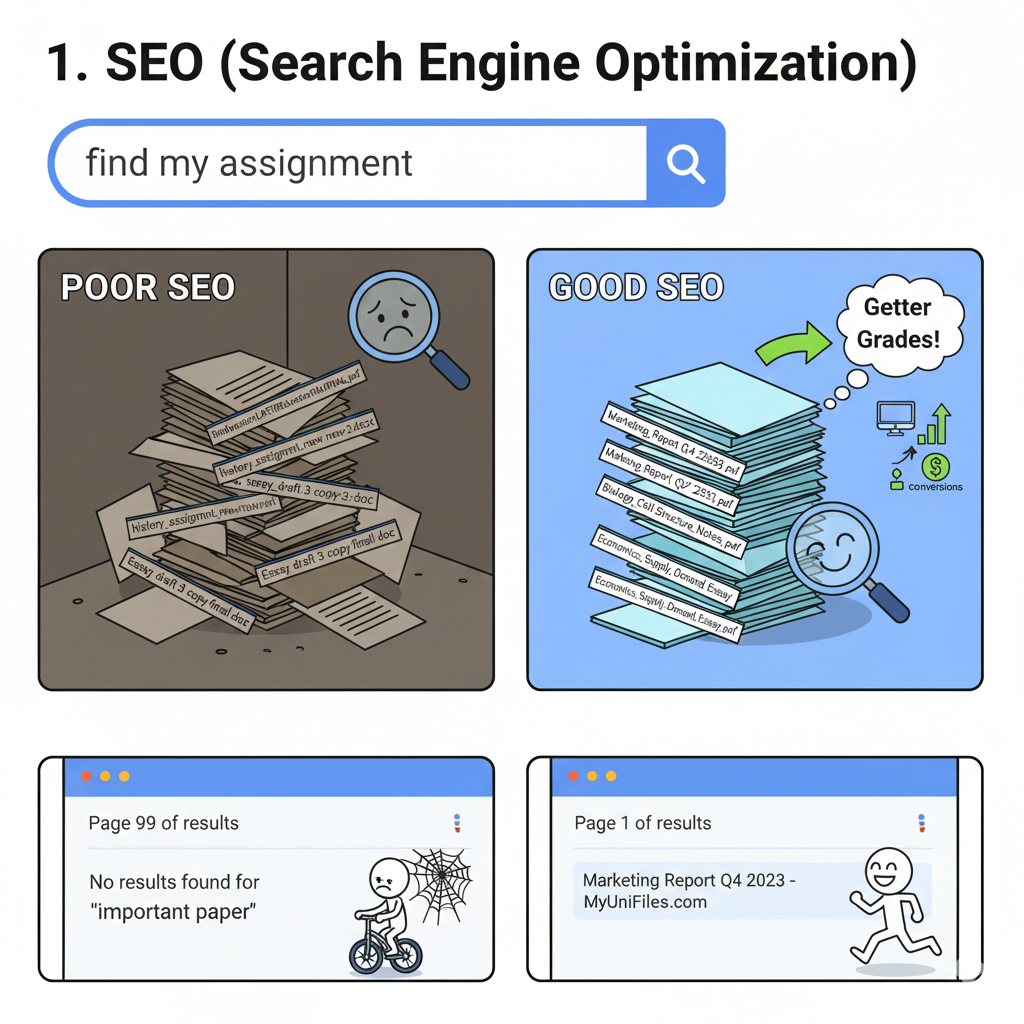
Your assignment files named “finalversionLASTREALversionFINALFINAL.pdf” have zero SEO. Even you can’t find them. If your files were ranked on Google, they’d be on page 99—the place no one has visited since the internet was born.
2. Content Marketing
Definition:
Content marketing delivers valuable, relevant content to attract and retain an audience — building trust over time.
Examples include videos, blogs, templates, notes, tips, and educational posts.
Example:
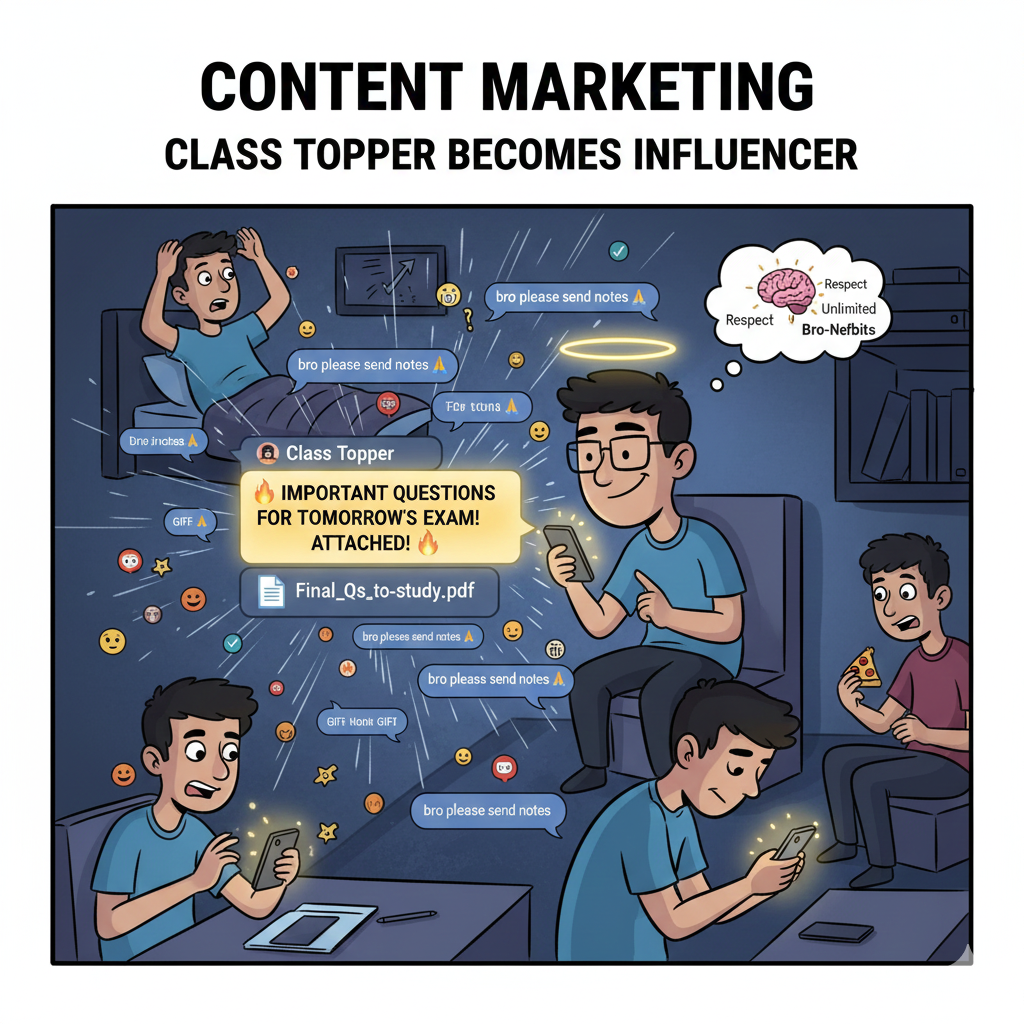
The class topper drops “important questions” in the WhatsApp group. Instantly, they become the influencer of the semester, earning respect, fame, and unlimited “bro please send notes” messages.
3. Social Media Marketing
Definition:
It involves using platforms to build brand awareness, engage audiences, create communities, and drive sales through posts, reels, influencers, and ads.
Example:
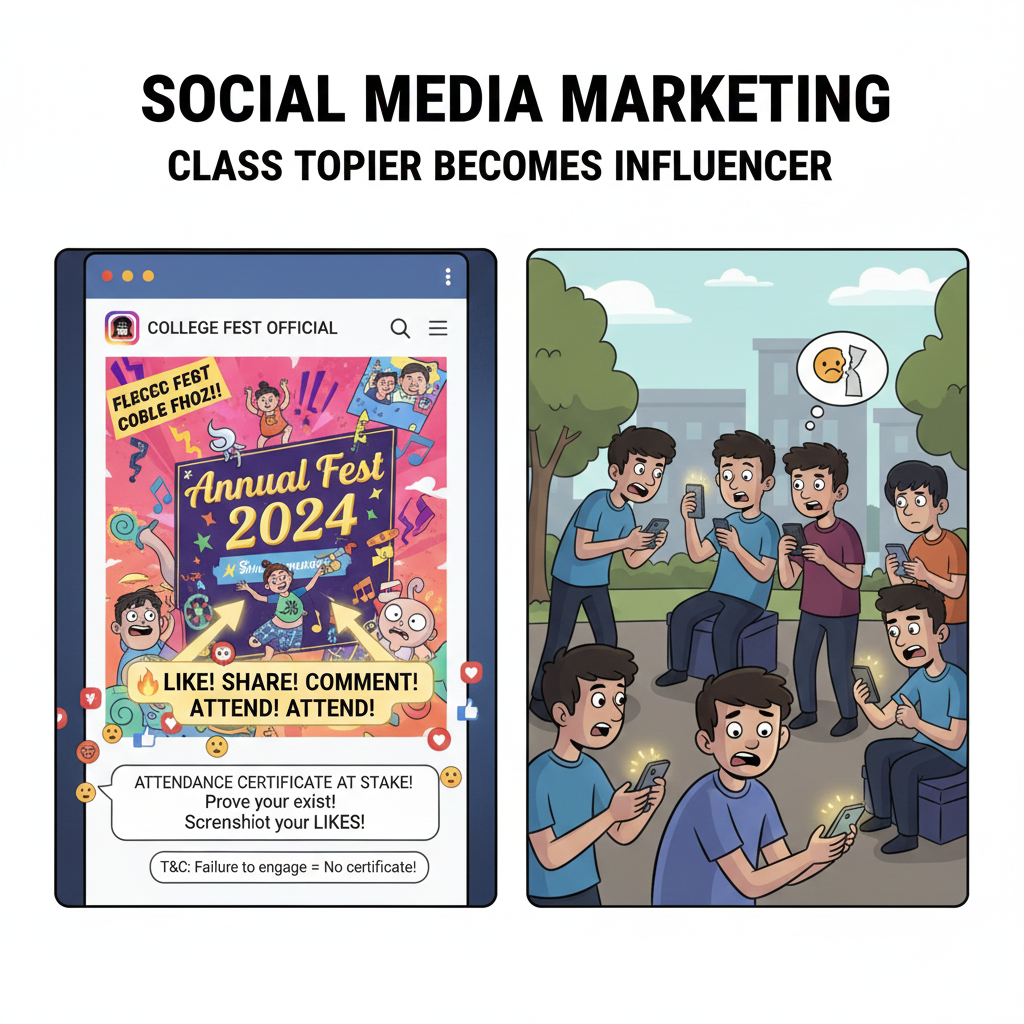
Your college fest Instagram page blasting “LIKE SHARE COMMENT” with more urgency than exam reminders.
They basically threaten attendance certificates unless you like the poster.
4. Email Marketing & Automation
Definition:
Automated emails are sent based on user behavior — reminders, confirmations, updates, promotions — creating personalized communication at scale.
Example:
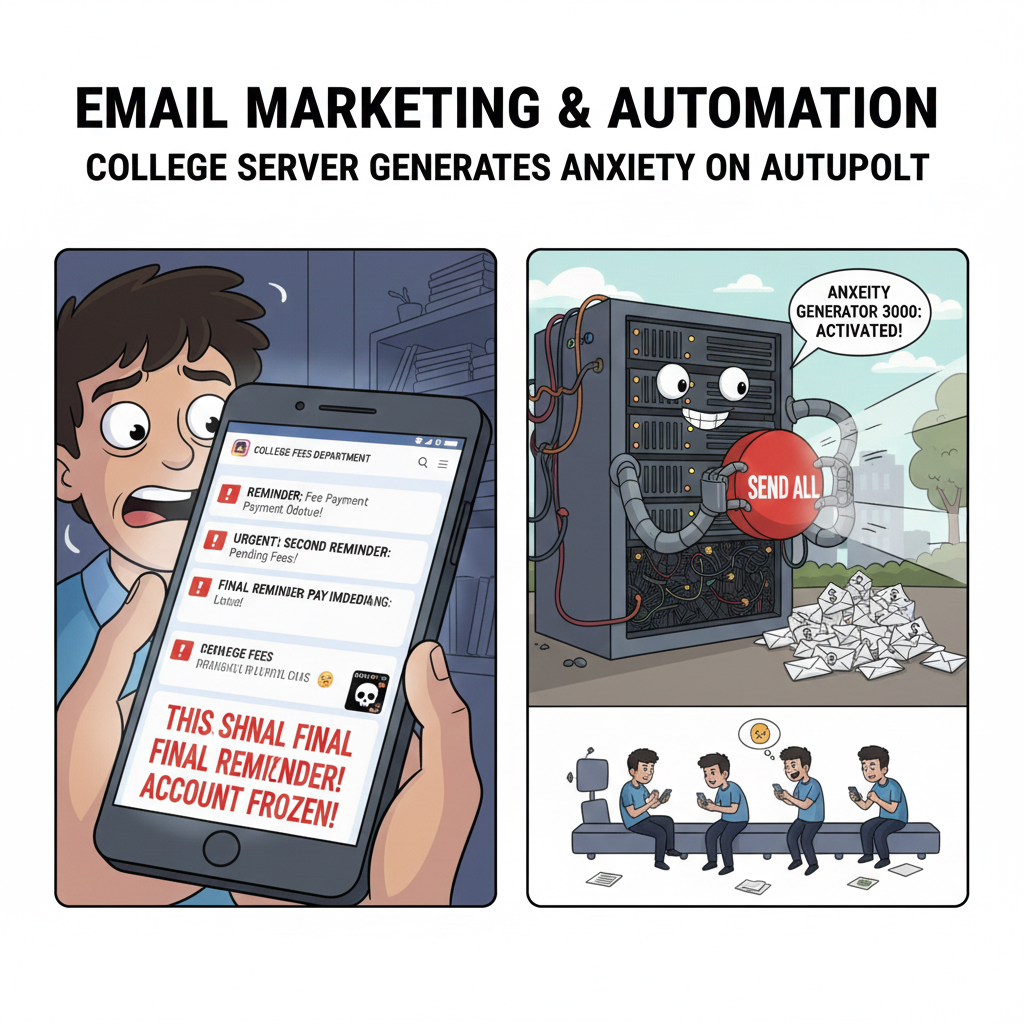
College server sends spam emails like: “REMINDER: You missed fee payment.” “REMINDER AGAIN.” “THIS IS YOUR FINAL FINAL FINAL REMINDER.”
Automation level: Generating anxiety on autopilot.
5. Analytics & Data Tracking
Definition:
Analytics tools track user behavior, performance metrics, and engagement to help marketers improve strategies and maximize results.
Example:
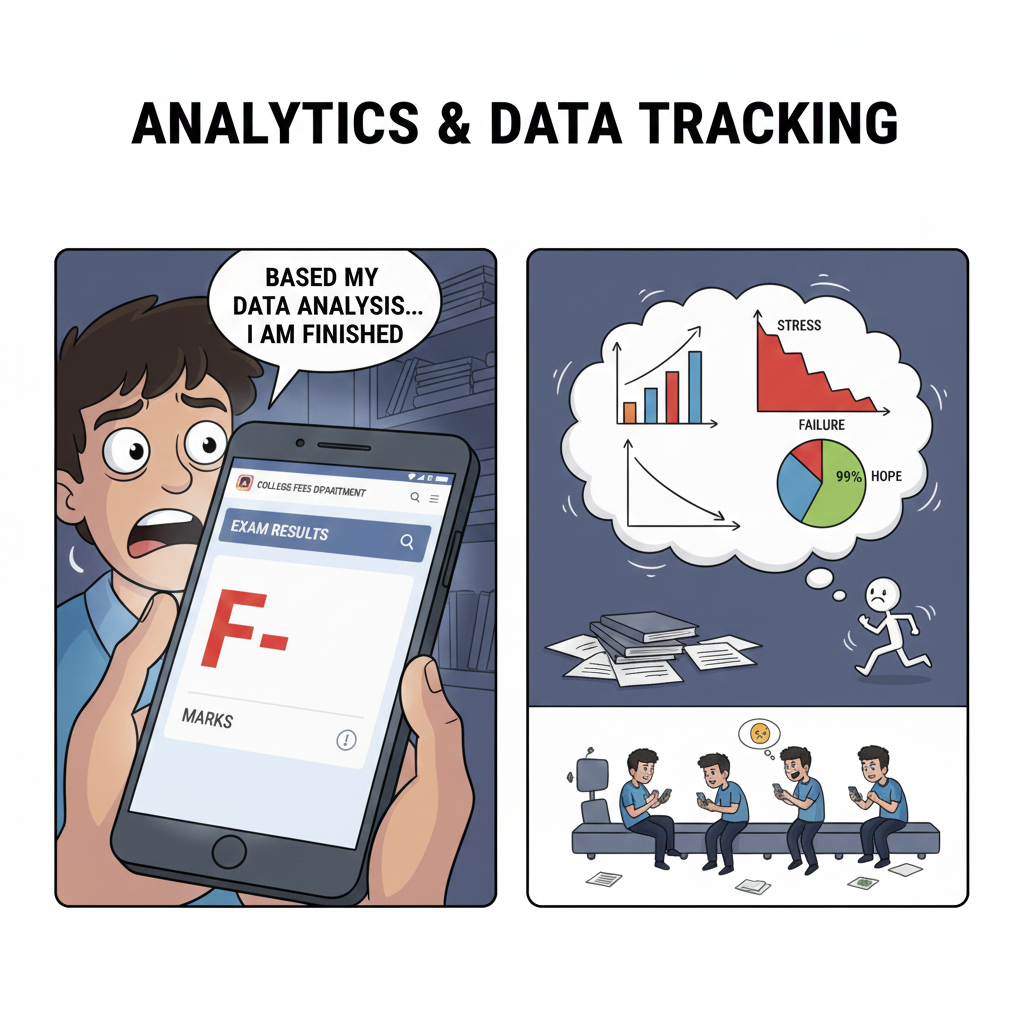
You checking your exam score: “Based on my data analysis… I am finished.” Your brain generates bar graphs showing stress going up and marks going down.
Branding & Advertising Concepts
1. Brand Identity
Definition:
Brand identity includes all the visible and verbal elements of a brand—logo, colors, typography, slogan, personality, and communication style. It shapes how the brand is presented and distinguishes it from competitors.
Example:
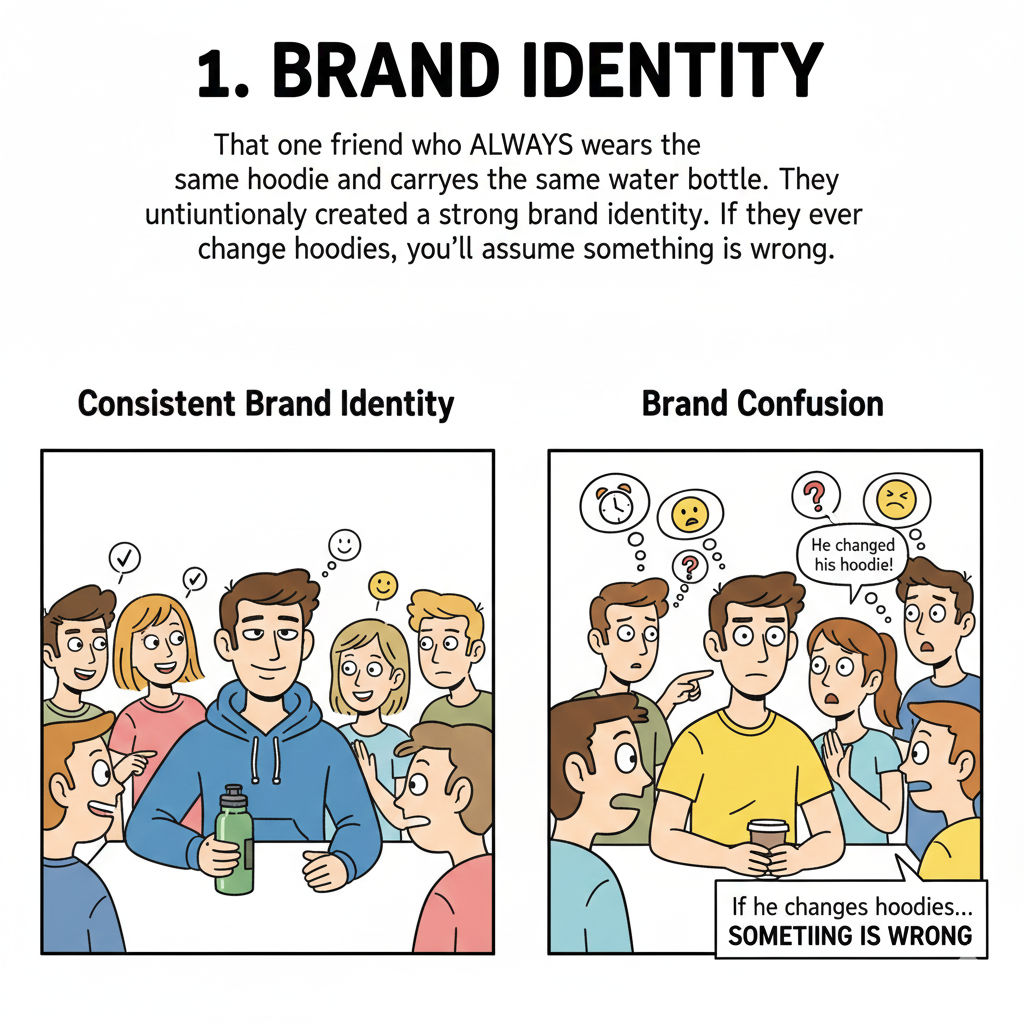
That one friend who ALWAYS wears the same hoodie and carries the same water bottle:
They unintentionally created a strong brand identity. If they ever change hoodies, you’ll assume something is wrong.
2. Brand Positioning
Definition:
Positioning defines how a brand occupies a distinct place in the minds of consumers. It highlights the brand’s unique value proposition and differentiators compared to competitors.
Example:
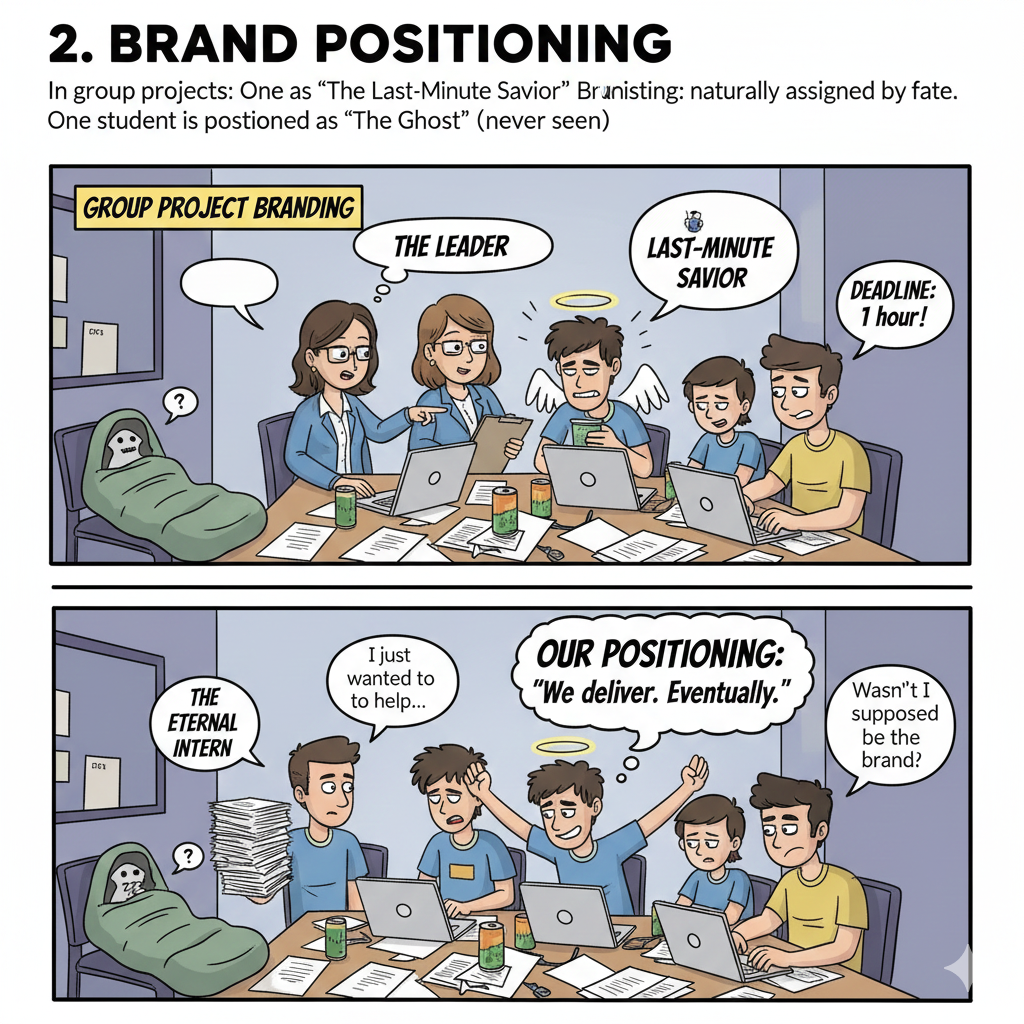
In group projects: One as “The Last-Minute Savior”
Brand positioning: naturally assigned by fate. One student is positioned as “The Leader” One as “The Ghost” (never seen)
3. Brand Equity
Definition:
Brand equity is the value a brand adds to a product because of customer perception, loyalty, awareness, and associations. High brand equity allows companies to charge premium prices and build strong customer loyalty.
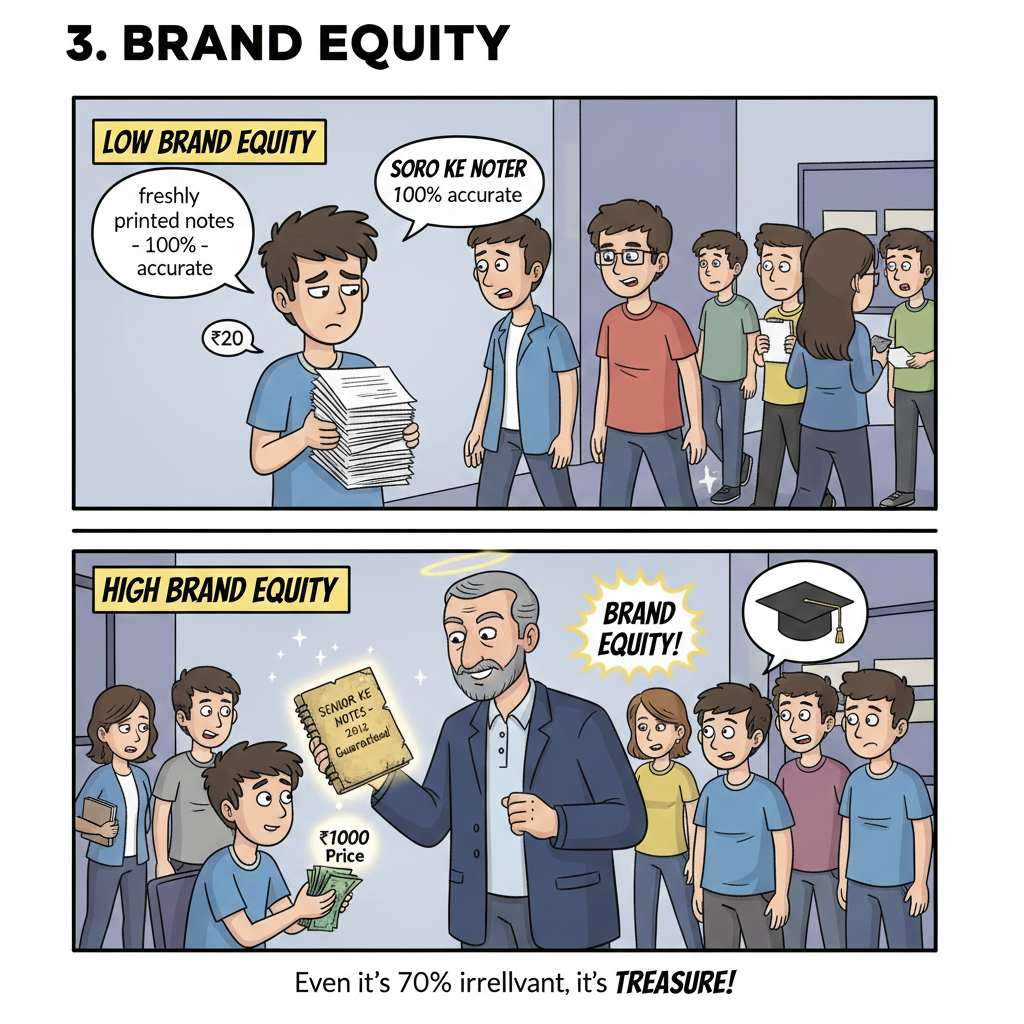
Example:
A senior gives you old notes: Even if the notes are from 2012 and 70% irrelevant, you still value them like treasure because “seniors ke notes = guaranteed pass”. That’s brand equity.
4. Brand Personality
Definition:
Brand personality refers to the human traits associated with a brand—such as excitement, sincerity, competence, sophistication, or ruggedness. It helps consumers connect emotionally with a brand.
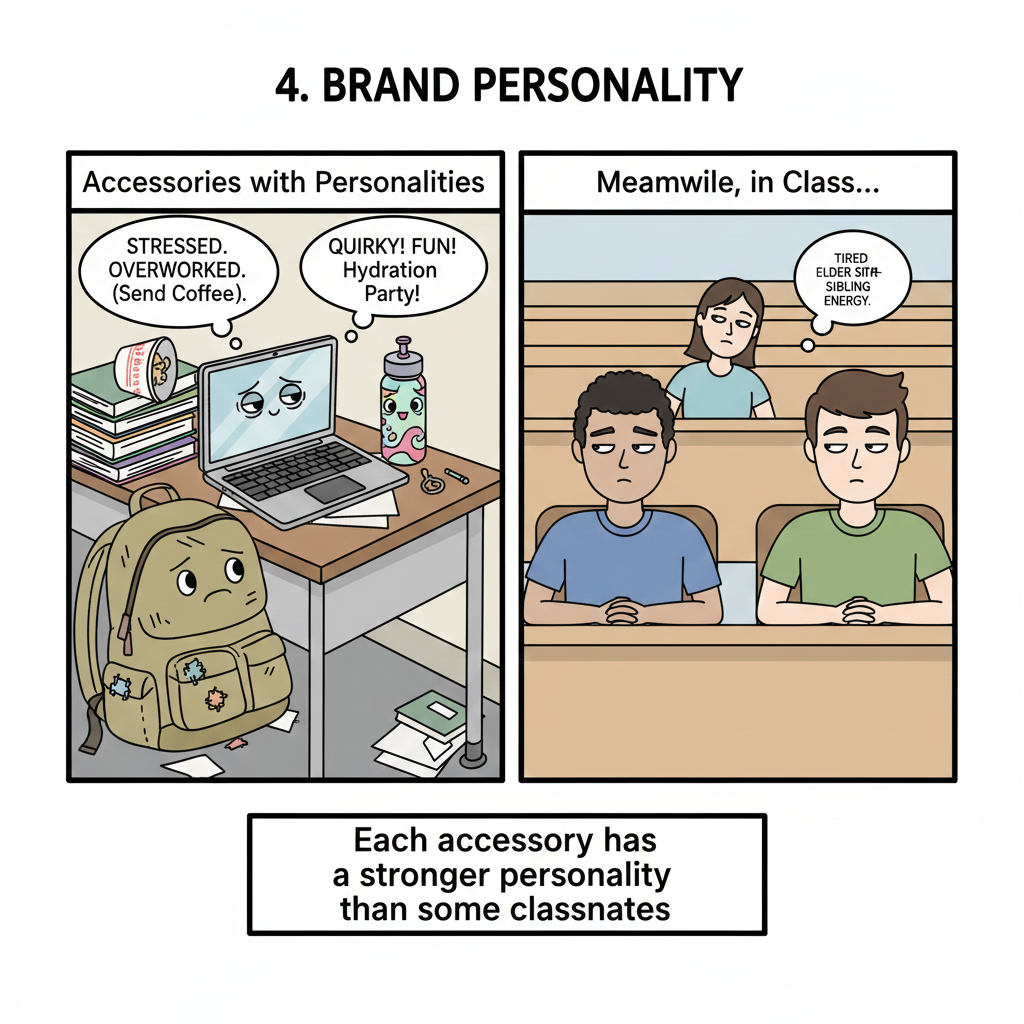
Example:
Your laptop has a stressed, overworked personality. Your water bottle is quirky and fun.
Your bag? Tired elder sibling energy. Each accessory has a stronger personality than some classmates.
5. Brand Consistency
Definition:
Consistency ensures that a brand’s messaging, visual identity, tone, and customer experience remain uniform across all platforms. Consistency builds recognition, trust, and reliability.
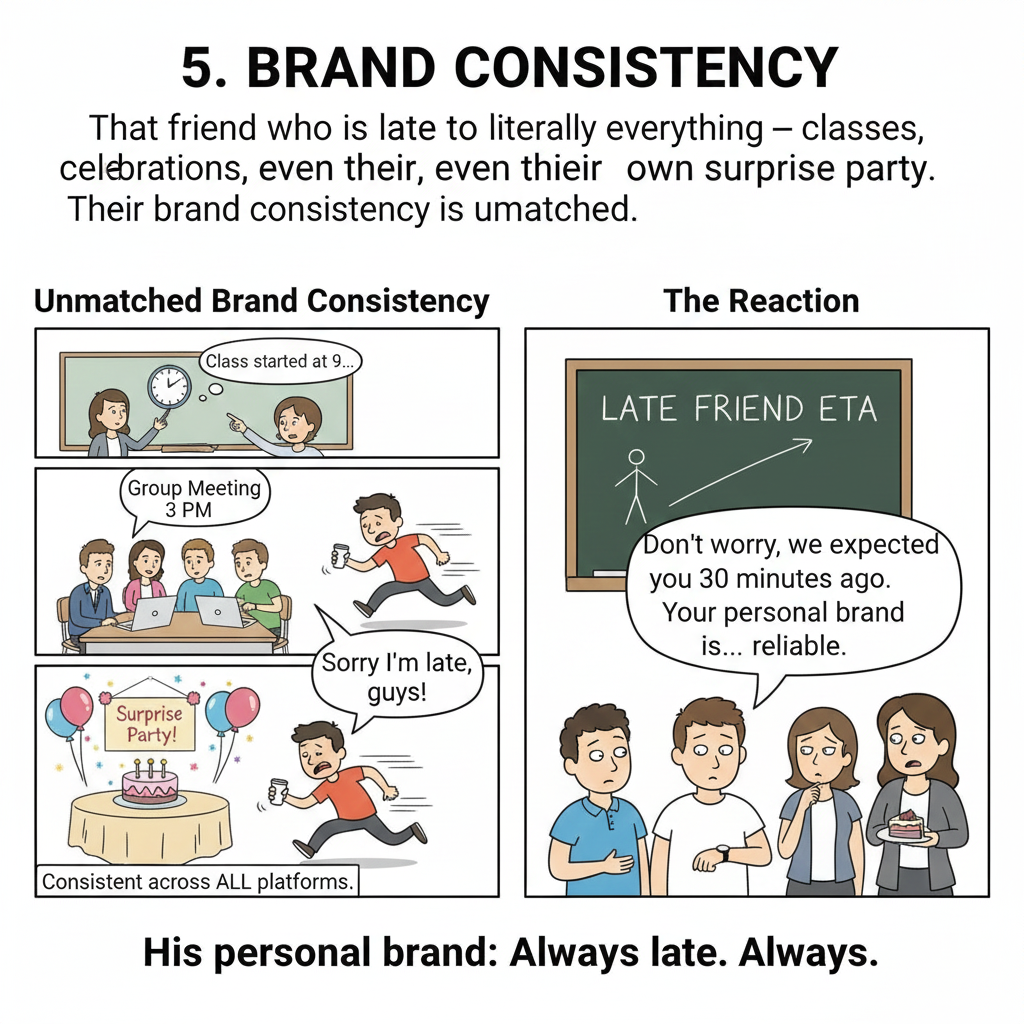
Example:
That friend who is late to literally everything — classes, group meetings, celebrations, even their own surprise party. Their brand consistency is unmatched.
CONSUMER BEHAVIOR CONCEPTS
1. Buying Decision Process
Definition:
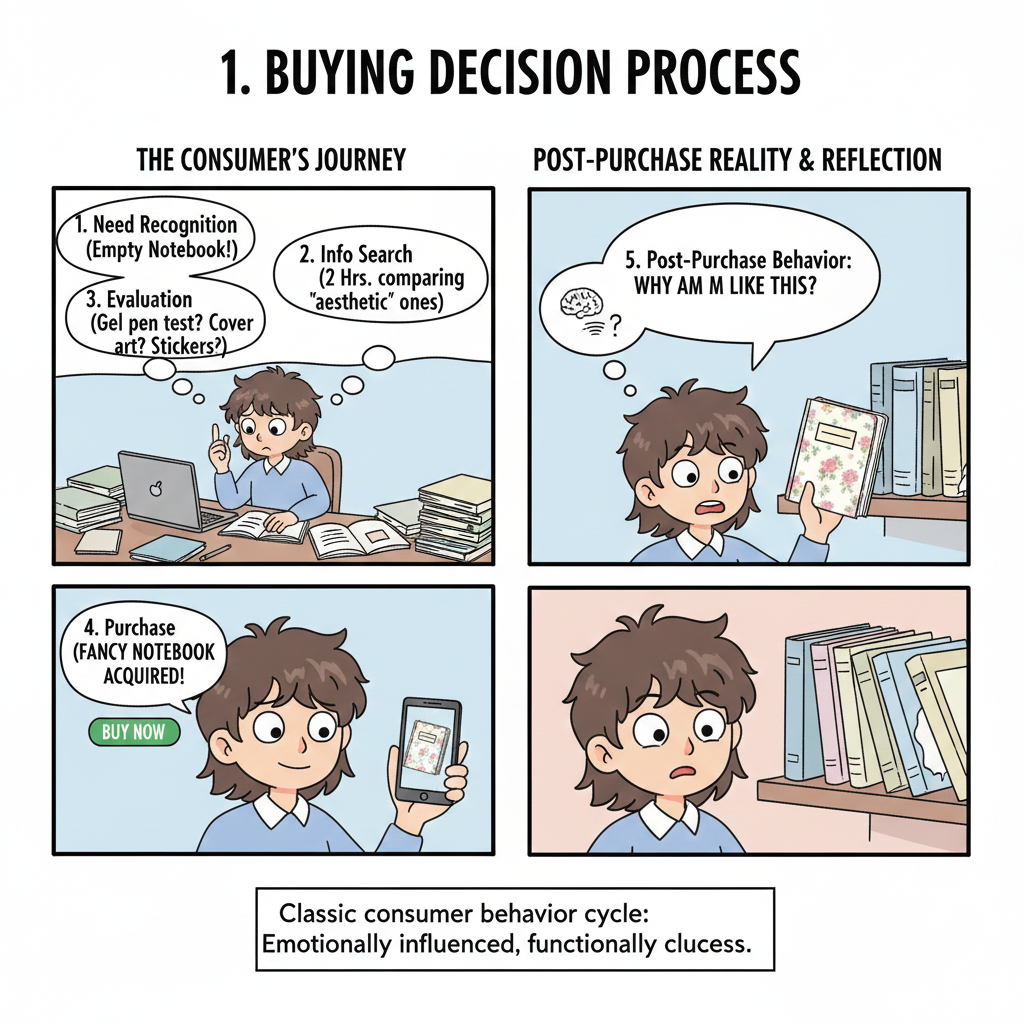
The buyer decision process is the series of steps a consumer goes through before, during, and after purchasing a product or service. It explains how and why people make buying decisions. Understanding this process helps marketers influence consumer behavior effectively. Consumers go through five steps: Need recognition, Information search, Evaluation of alternatives, Purchase decision, Post-purchase behavior
Understanding this process helps marketers influence decisions at each stage.
Example:
You need a notebook. You spend 2 hours comparing cute aesthetic ones online. You buy a fancy one. You never write in it. You reflect later and think: “Why am I like this?” Classic consumer behavior cycle.
2. Motivation
Definition:
Motivation refers to internal forces that drive consumer behavior. It can be physiological (hunger, safety) or psychological (esteem, self-fulfillment). Marketers tap into these motives to create appealing messages.
Example:
Your motivation to study kicks in only at 11:59 PM before the exam, when panic hits harder than caffeine. Fear becomes your biggest motivator.

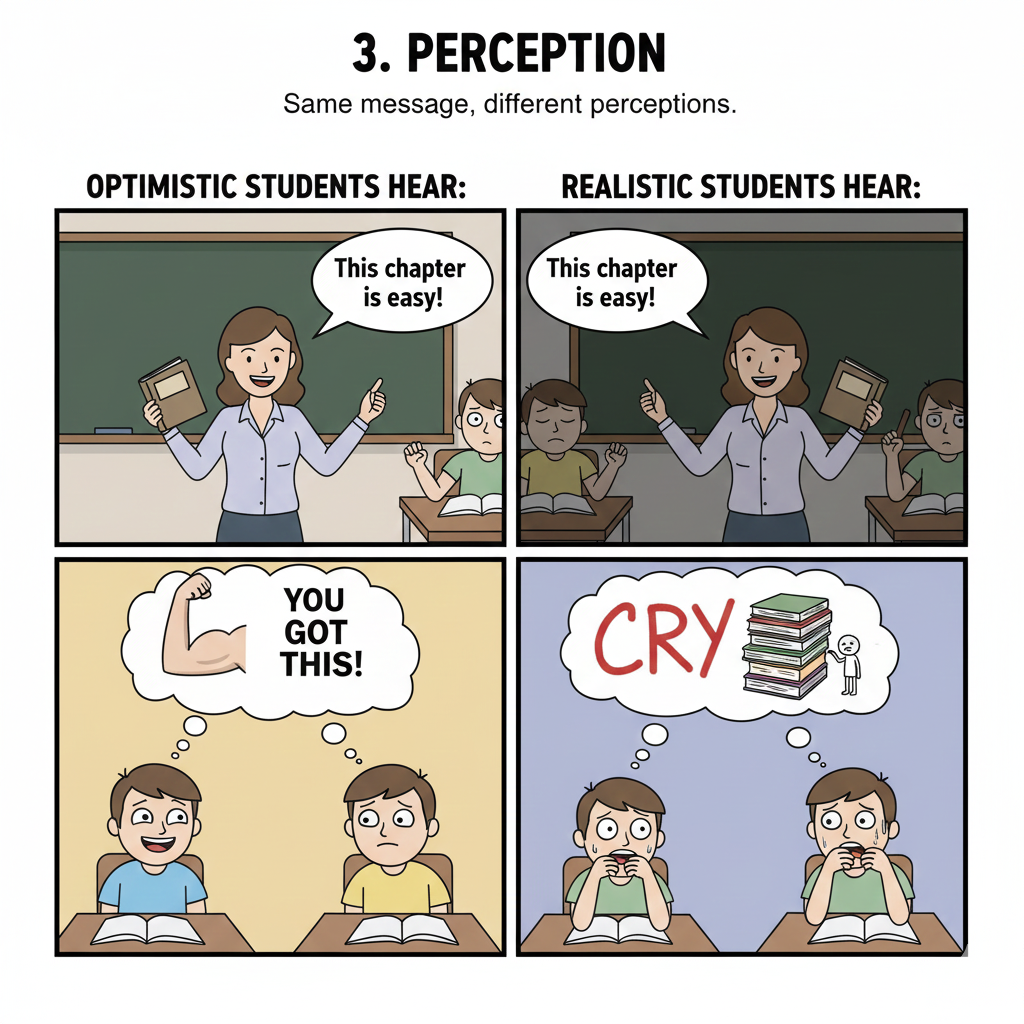
3. Perception
Definition:
Perception is the process of selecting, organizing, and interpreting information. Consumers do not perceive all information the same way—selective attention and distortion affect how they absorb marketing messages.
Example:
Teacher says: “This chapter is easy.” Optimistic students hear: “You got this.” Realistic students hear: “Prepare to cry.” Same message, different perceptions.
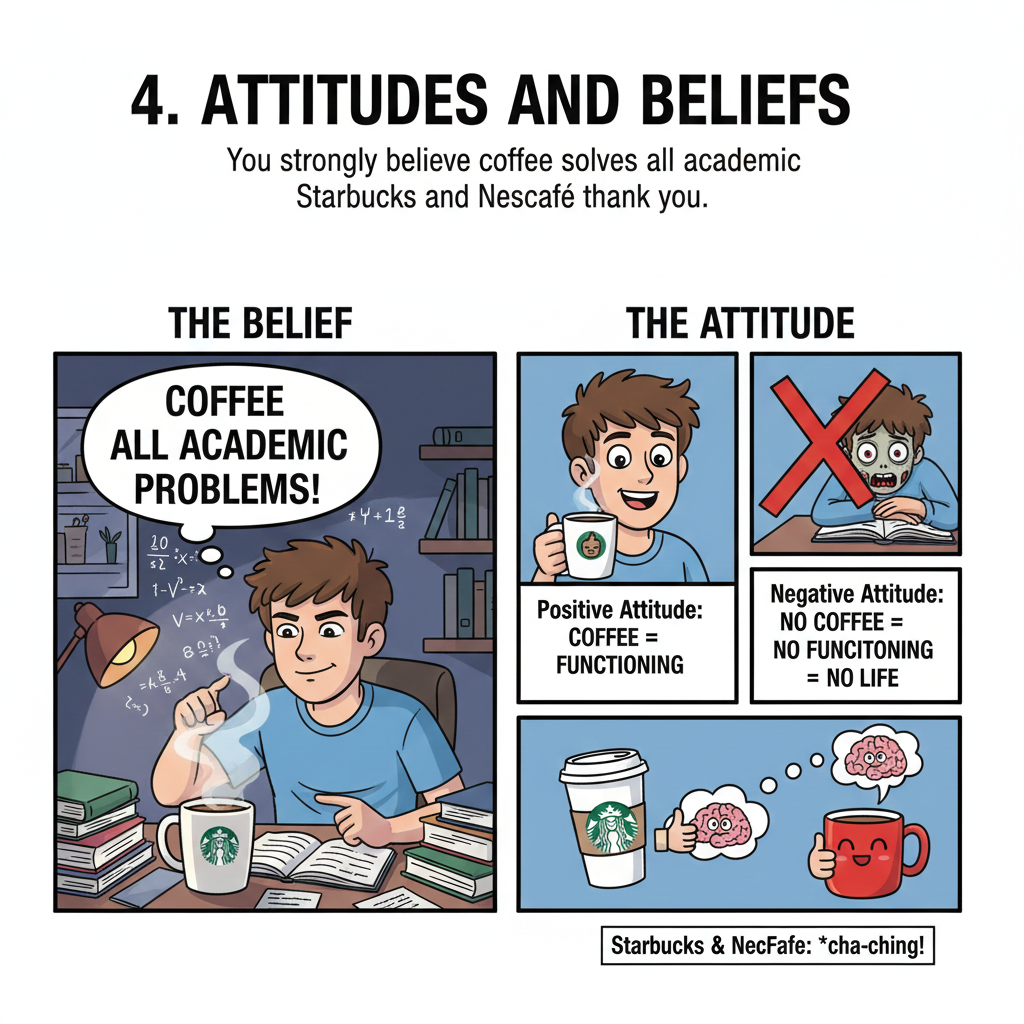
4. Attitudes and Beliefs
Definition:
Attitudes are a consumer’s overall evaluations or feelings toward a product, formed through beliefs and experiences. Positive attitudes lead to preference and loyalty, while negative attitudes discourage purchase.
Example:
You strongly believe coffee solves all academic problems. So your attitude is: No coffee = No functioning = No life. Starbucks and Nescafé thank you
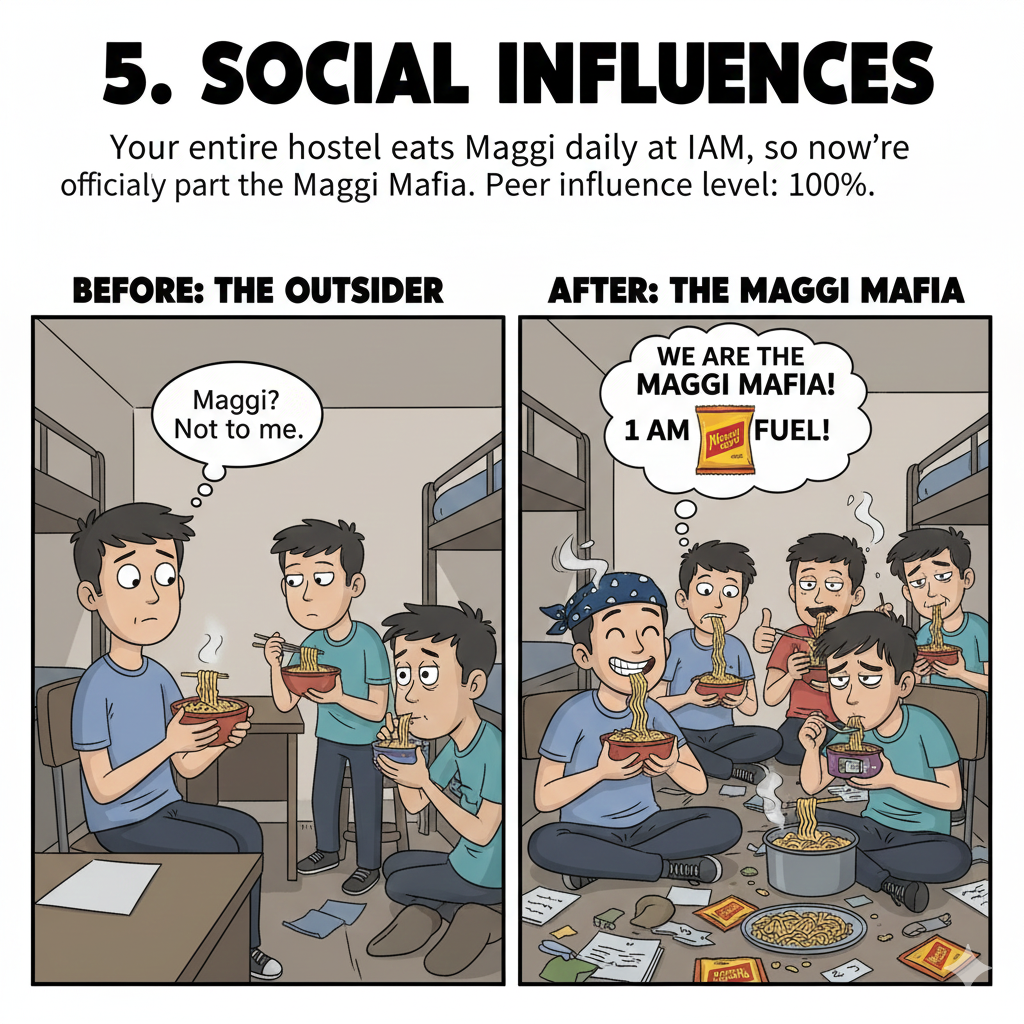
5. Social Influences
Definition:
Social factors include family, culture, peer groups, influencers, and social media communities that shape consumer decisions. People often adopt buying behaviors that align with group norms or admired individuals.
Example:
You didn’t even like Maggi at first. But your entire hostel eats Maggi daily at 1 AM, so now you’re officially part of the Maggi Mafia. Peer influence level: 100%
Why Learn Marketing This Way ?
- Makes learning fun
- Reduces exam fear
- Improves concept clarity
- Makes theory relatable
- Increases student engagement
Marketing is not just business — It is daily life in disguise.